
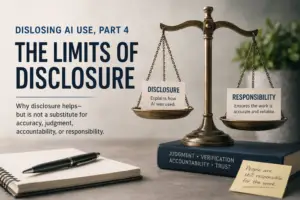
Disclosing AI Use, Part 4: The Limits of Disclosure
AI-use disclosure can help readers understand how AI shaped the work, but it cannot do the work for the writer. Someone still has to verify the facts, exercise judgment, protect confidential information, and stand behind the final result.
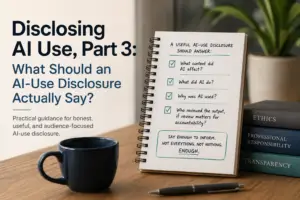
Disclosing AI Use, Part 3: What to Say in an AI-Use Disclosure?
A useful AI-Use Disclosure should not say everything, and it should not say nothing. It should say enough to help the audience understand what AI did, whether that use affects trust or reliance, and who remains responsible for the final product.
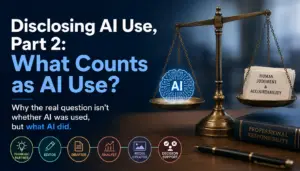
Disclosing AI Use, Part 2: What Counts as AI Use?
AI-use disclosure should not turn on whether AI touched the work in some way. That question is too broad to be useful. The better question is what AI did. Did it help brainstorm? Edit? Draft? Analyze? Create media? Influence a decision? Those uses sit on a spectrum, and they do not all require the same kind of disclosure.
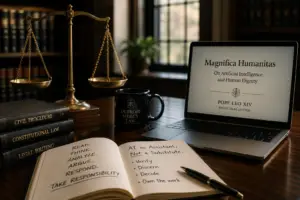
AI & the Work Worth Keeping in Legal Education
Pope Leo XIV’s Magnifica Humanitas does not tell law schools to fear AI or worship it. It asks a better question: what kind of people are our technologies forming? For legal education, that means teaching students to use AI while protecting the slow human work that builds judgment, responsibility, and professional identity.
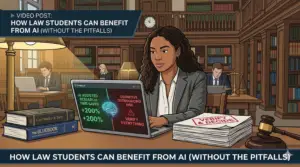
Video: How Law Students Can Benefit from AI (While Avoiding the Pitfalls)
I’ve centered this post on a video where I tackle the ultimate paradox for law students: AI can double your learning gains, but it can also end your career before it starts. I dive into a concept I call “cognitive outsourcing”—the temptation to hand off hard mental work to a machine just because the output looks polished. Watch the full breakdown to see why “automation bias” is a silent killer and how to implement a four-step workflow that builds your legal judgment instead of replacing it. It’s about augmenting your intelligence, not outsourcing your brain.
AI Literacy for Law Students
This guide is about how to use AI in law school without letting it do the thinking for you. AI can make work feel easier and more finished than it really is. That’s useful in some moments and risky in others, especially when you’re still learning how to exercise legal judgment. The goal isn’t to avoid these tools. It’s to use them in a way that actually helps you become a better lawyer. Download the free guide to learn more.
How to Build Your Own AI Tutor
The guide explains how to build an AI tutor that supports real learning rather than replacing it. It assumes you have already accepted that students are using AI and focuses on the harder work of designing boundaries, structure, and responsibility into how that AI shows up in your course.

Welcome to the Classroom
The Classroom is where Trudeau.ai stops thinking out loud and start helping you learn. This is a space for learning skills like clear writing, AI-assisted thinking, and professional judgment in a world where tools are powerful and human decisions still matter.