
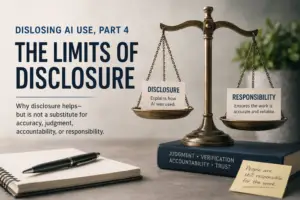
Disclosing AI Use, Part 4: The Limits of Disclosure
AI-use disclosure can help readers understand how AI shaped the work, but it cannot do the work for the writer. Someone still has to verify the facts, exercise judgment, protect confidential information, and stand behind the final result.
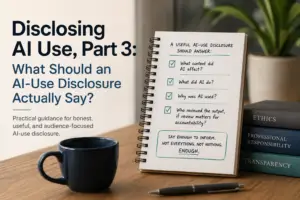
Disclosing AI Use, Part 3: What to Say in an AI-Use Disclosure?
A useful AI-Use Disclosure should not say everything, and it should not say nothing. It should say enough to help the audience understand what AI did, whether that use affects trust or reliance, and who remains responsible for the final product.
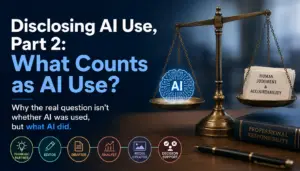
Disclosing AI Use, Part 2: What Counts as AI Use?
AI-use disclosure should not turn on whether AI touched the work in some way. That question is too broad to be useful. The better question is what AI did. Did it help brainstorm? Edit? Draft? Analyze? Create media? Influence a decision? Those uses sit on a spectrum, and they do not all require the same kind of disclosure.
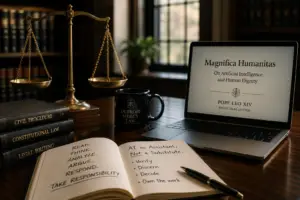
AI & the Work Worth Keeping in Legal Education
Pope Leo XIV’s Magnifica Humanitas does not tell law schools to fear AI or worship it. It asks a better question: what kind of people are our technologies forming? For legal education, that means teaching students to use AI while protecting the slow human work that builds judgment, responsibility, and professional identity.
Disclosing AI Use, Part 1: The Problems with Disclosure
AI disclosure sounds simple until you ask what “AI use” actually means. Is brainstorming the same as drafting? Is editing the same as analysis? This post starts a series on why the goal should not be maximum disclosure, but meaningful disclosure that helps people understand what AI did, who reviewed it, and why it matters.

The “Walkable” Car Wash: Why AI Still Needs a Human in the Driver’s Seat
Context is king. While AI might be able to pass the Bar exam, it will sometimes tell you to walk to the car wash instead of taking your car there. This post explores why the AI sometimes produces logic fails and why your prompting skills are the ultimate safety net for AI adoption.
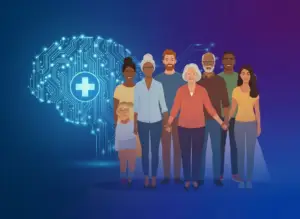
AI Literacy Is Becoming a Health Equity Issue: What Economist Impact’s New Roadmap Reveals
When AI starts explaining our health information, judgment matters more, not less. Drawing on patient experience and a recent Economist Impact report, this article explores why AI literacy is emerging as a prerequisite for equitable healthcare.

ChatGPT Health: Why Health Literacy Now Requires AI Literacy
ChatGPT Health promises to help people understand their medical records and prepare for care. That could be a breakthrough. It could also magnify long-standing health literacy gaps and introduce new AI literacy risks if we are not careful. This piece looks past the hype to ask what this launch means for people who already struggle to make sense of health information, and what responsible design would actually require.