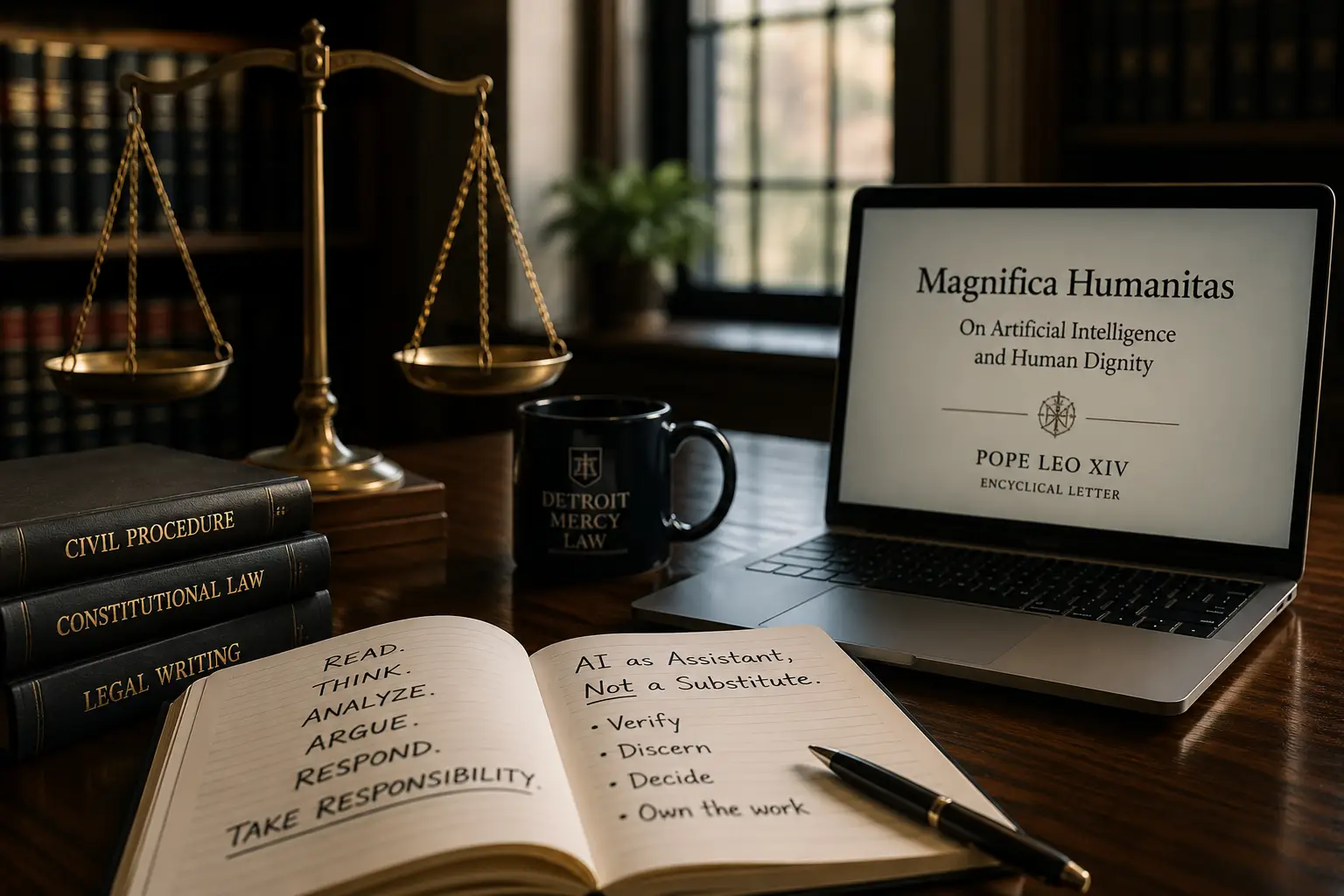
I spent part of the holiday reading Pope Leo XIV’s new encyclical on artificial intelligence, Magnifica Humanitas. That may not be everyone’s idea of relaxation, but we all have our hobbies. Some people smoke ribs. Some people refinish furniture. I apparently read papal documents about artificial intelligence and think, “This might be useful for my fall syllabus.”
I read the encyclical as someone who uses AI every day and sees enormous promise in these tools. I use AI to brainstorm, revise, organize, build workflows, test assignments, and think through how legal education should respond to a profession that is already changing. I do not pretend that AI does not exist. That would be like teaching admiralty law and refusing to mention boats.
But I also teach at Detroit Mercy Law School, a Catholic law school shaped by the Jesuit and Mercy traditions. Our aim is at Detroit Mercy is to educate the complete lawyer. That phrase can sound a little lofty until you think about what it really means.
We are not just trying to help students pass exams, land jobs, or write better memos, though I am strongly in favor of all three. 🙂 Instead, we are trying to form lawyers who can think clearly, write honestly, serve clients well, and remember that law is always about people. I think that mission should shape how we think about AI in legal education.
In my view, the real question for legal education is not whether students will use AI. They will. The better question is what AI will train them to become. Will it help them become more careful readers, more honest writers, more disciplined thinkers, and more responsible lawyers? Or will it teach them to skip the hard parts, trust polished answers, and confuse fluency with judgment? That is where Magnifica Humanitas feels especially important. The encyclical does not give law professors a classroom policy. It gives us a way to think about formation. It asks us to consider not only what technology can do, but what it does to us (and our students) while we (they) use it.
The Question Is Formation, Not Permission
One of the strongest parts of the encyclical is that it refuses both panic and hype. Pope Leo recognizes that technology can “heal, connect, educate and protect our common home,” but he also warns that it can “divide, exclude and generate new forms of injustice” (Magnifica Humanitas, no. 9). That kind of balance is exactly what we need. I do not think law schools should respond to AI with blanket bans, moral panic, or the academic equivalent of hiding under the desk until the storm passes. But I also do not think we should treat every new AI tool as progress simply because it is shiny and new.
The practical question for us is much more basic: what is this tool doing to a student’s learning? If AI helps a student understand a difficult concept, test an argument, or revise unclear writing, that may serve the educational mission. If it lets the student avoid reading, avoid thinking, or avoid taking responsibility for legal analysis, then it is not helping. It is just moving the student more efficiently around the work that law school exists to teach.
Tools, Habits, and Formation
This is where the encyclical’s discussion of education becomes especially useful for legal educators. Pope Leo writes that education “is a long journey requiring patience” and needs “time for development and for engagement with reality beyond appearances.” That is a helpful when AI often rewards speed, polish, and instant output. Pope Leo then makes the point even more directly: “every technology shapes those who use it.” So teaching students to use AI cannot mean only showing them which prompts work best. It also has to mean teaching them “to decide when and for what purpose it ought not to be used” (Magnifica Humanitas, no. 140).
That is the part that matters most to me. We often talk as though AI is just a tool students pick up and put down. But tools train habits. A student who uses AI to check a citation is building one habit. A student who uses AI to replace the first read of a case is building another. A student who asks AI to critique a draft after struggling through the first version is not doing the same thing as a student who asks AI to write the draft before doing the thinking.
Pope Leo’s quote from Plato helps explain why that difference matters. Some things are learned only through time, effort, discussion, and the slow work of “striking upon” ideas and experiences together until “the spark of understanding” is kindled. (Magnifica Humanitas, no. 140). That sounds a lot like legal education to me. Students do not learn legal analysis by being near legal analysis. They learn it by doing it, badly at first, then less badly, and eventually with something approaching competence and confidence. That is the glamorous life of legal education.
Keep the Struggle That Teaches Judgment
In my view, this means we need to protect productive struggle. I do not mean we should make law school artificially miserable. Law school has never needed much help on that front. I mean that some forms of struggle are educationally necessary.
Students need to wrestle with ambiguous facts, incomplete rules, competing authorities, and their own first drafts. They need to experience the moment when a case does not say what they thought it said. They need to revise a paragraph until it stops wandering around like it lost its car keys. They need to learn that good legal writing is not just clean prose; it is disciplined thought. AI can support that process, but it should not replace it.
This might mean a rule that students should write their own first case brief, issue statement, or rule explanation before using AI. Then use AI to test, challenge, or improve what they produced. That small sequencing choice protects the learning while still teaching students how to work with the technology.
The Trouble with Answers That Arrive Too Easily
The encyclical is also useful because it names one of the biggest dangers of generative AI: the appeal of “ready-made answers.” Pope Leo warns that the “speed and simplicity” of AI systems can encourage “excessive reliance” and “weaken personal creativity and judgment” (Magnifica Humanitas, no. 100). That captures the problem beautifully.
Generative AI gives students something that looks finished. It often sounds confident, organized, and professional. But legal educators know that finished-looking work can still be empty, unsupported, or wrong. A student may see a polished AI answer and think the hard part is done. A lawyer should see the same answer and ask: What is the authority? What jurisdiction? What facts are missing? What assumptions are buried in this conclusion? What would I need to verify before I could sign my name to it? Of course, we know that quite a few practicing lawyers fall into these traps, too, and are being sanctioned for it.
Teach Students to Verify Before They Trust
This is where AI should push us to teach verification as a core legal skill, not as an afterthought. We can no longer assume students understand that a confident answer deserves skepticism. Many students have grown up in a digital world where information appears instantly and authority often comes dressed as convenience. Law school needs to interrupt that pattern by teaching what Pope Leo calls the “essential exercise of research, reflection and discernment,” which he warns can be displaced when education becomes just “an incessant flow of information.” (Magnifica Humanitas, no. 146).
Those three things are almost ready-made learning objectives for AI-assisted legal education:
- Research asks whether the student can find and verify the law.
- Reflection asks whether the student understands the client, the context, and the consequences.
- Discernment asks whether the student can decide what to use, what to revise, what to reject, and what no tool should decide for them.
I think every AI-related assignment should include some verification component. Students should have to identify which parts of an AI output are legal claims, which parts are factual claims, which parts are unsupported, and which parts require checking against primary authority. They should have to explain what they accepted, what they changed, and what they rejected.
In other words, the assignment should not be “use AI to get an answer.” It should be “use AI, then show me your judgment.” I like that sequence because it moves beyond AI literacy. AI literacy is important, but it is not enough. Students need to know how the tools work, where they fail, and how to prompt them effectively. But professional judgment requires more than tool competence. It requires a student to understand the limits of the answer and the responsibilities that come with using it.
The Lawyer Still Signs the Work
This point connects directly to legal ethics. Pope Leo reminds readers that AI systems may imitate language and analytical skill, but “they do not understand what they produce,” because they lack the “affective, relational and spiritual perspective through which human beings grow in wisdom.” (Magnifica Humanitas, no. 99).
Theology aside, for lawyers and law students, this is a practical point on professionalism. AI does not owe duties of competence, confidentiality, candor, loyalty, or diligence. Nor does AI stand before a judge or look a client in the eye (at least not yet). The lawyer does all of these things and owes all of these duties. The ABA’s Formal Opinion 512 on generative AI makes this same practical point: existing duties of competence, confidentiality, communication, supervision, candor, and reasonable fees still apply when lawyers use generative AI.
So when law students use AI, they need to understand that they are not consulting an oracle. They are using a system that predicts language based on data and patterns. Sometimes that system will be useful. Sometimes it will be wrong. Sometimes it will be wrong in a very convincing way.
AI Can Expand Access and Deepen Inequality
I also think the encyclical gives law schools a better way to talk about fairness and access. AI can expand access to learning. It can help students who need another explanation, another example, another chance to practice. It can make some kinds of feedback more available. Those benefits can be significant. In my view, we need to be honest enough to name the benefits of AI rather than treating every use of AI as a threat.
At the same time though, AI can widen inequality if some students have better tools, better training, or more confidence using them. It can also reproduce bias under the appearance of neutrality. Pope Leo warns that when AI systems present themselves as neutral and objective, they can reflect and reinforce stereotypes or ideological bias. (Magnifica Humanitas, no. 102). He then puts the point plainly: “we cannot consider AI to be morally neutral,” because every technical tool embodies choices and priorities in what it measures, ignores, optimizes, and classifies. (Magnifica Humanitas, no. 104).
That observation should shape the conversation in every law school, but it has special force in a Catholic law school committed to justice and human dignity. Our graduates will not merely use these systems. They will advise clients deploying them, challenge them in court, regulate them, contract around them, and represent people affected by them. Because of this, as a law professor, I feel I have a duty to educate students how best to “examine how [an AI system] is designed and what vision of the human person and society is embedded in the data and models that guide it.” (Magnifica Humanitas, no. 104).
From AI Users to AI Stewards
So I think our goal should be to form AI stewards, not just AI users. A user asks, “How can this tool help me finish faster?” A steward asks, “Who benefits from this system? Who is harmed? Who can challenge the output? Who bears responsibility? Who gets left out? What human judgment must remain in the loop?”
Those questions belong in legal education because they are legal questions, ethical questions, and human questions at the same time. They also help students see that technology is not magic dust sprinkled on existing systems. It reflects choices. It allocates power. It creates records. It shapes incentives. It can make injustice harder to see by making it look automated, objective, and inevitable. Pope Leo makes a similar accountability point when he says responsibility must be clearly defined from those who design and develop AI systems to those who use and rely on them, including the ability to identify who must account for decisions and remedy harm. (Magnifica Humanitas, no. 105).
What I Think This Means in the Classroom
For the classroom, in my view, this means we should be more concrete in how we teach AI. I would not simply add a paragraph to the syllabus saying “use AI responsibly” and call it a day. Students need practice, examples, and repeated chances to decide when the tool helps and when it quietly distorts the work.
In a legal writing course, we might ask students to draft their own analysis first, then use AI to generate counterarguments, then require a short reflection explaining what the AI missed. In a doctrinal course, we might give students an AI-generated explanation of a case and ask them to find the errors, omissions, and overstatements. In a professional responsibility course, we might ask students to evaluate an AI-assisted workflow for competence, confidentiality, supervision, and candor. In a clinic or simulation course, we might ask students whether an AI tool improves client service or creates new risks for a vulnerable client. These are ways to teach the core lawyering skill of responsible judgment in a world where polished sounding text is easy to produce.
What Catholic Legal Education Adds to the AI Conversation
In my view, the Catholic intellectual tradition has something real to offer. At a Catholic law school, the question is never only “Can we do this?” It is also “Should we do this, for whom, at what cost, and in service of what vision of the human person?”
Those questions are not obstacles to innovation. They are what make innovation worth pursuing. Magnifica Humanitas does not ask us to reject technology. It asks us to place technology within a larger account of human dignity, truth, relationship, justice, and the common good. That connects closely with Detroit Mercy’s broader university mission, which describes a Detroit Mercy education as seeking to integrate the “intellectual, spiritual, ethical and social development” of students. I think that is exactly the conversation law schools should be having right now.
So What Should Law Professors Do?
For me, the practical takeaway flows directly from paragraph 238: do not ban AI, and do not surrender to it. Invest in education, beginning with ourselves. Teach it. Test it. Question it. Put it inside assignments that require students to think before, during, and after they use it.
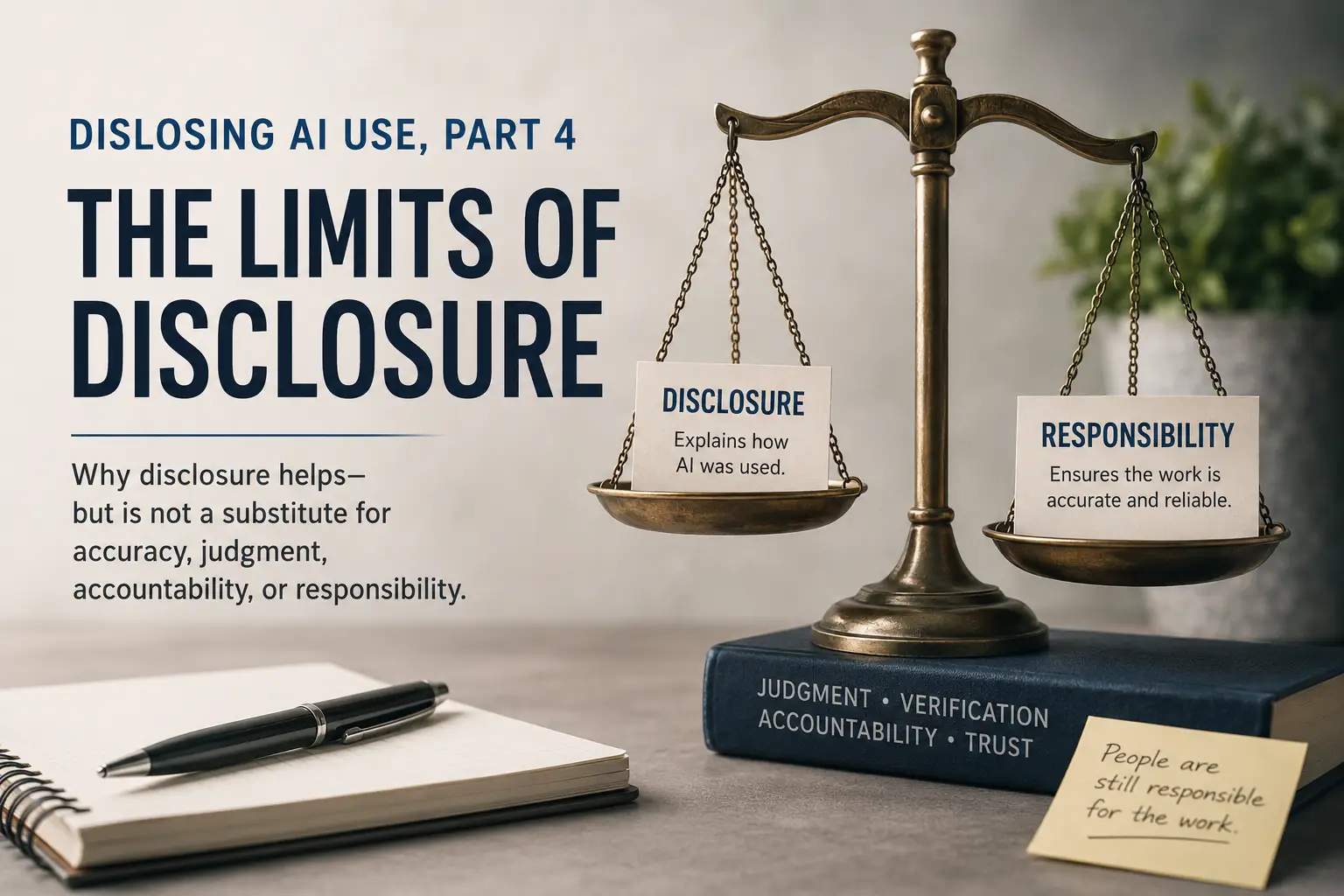
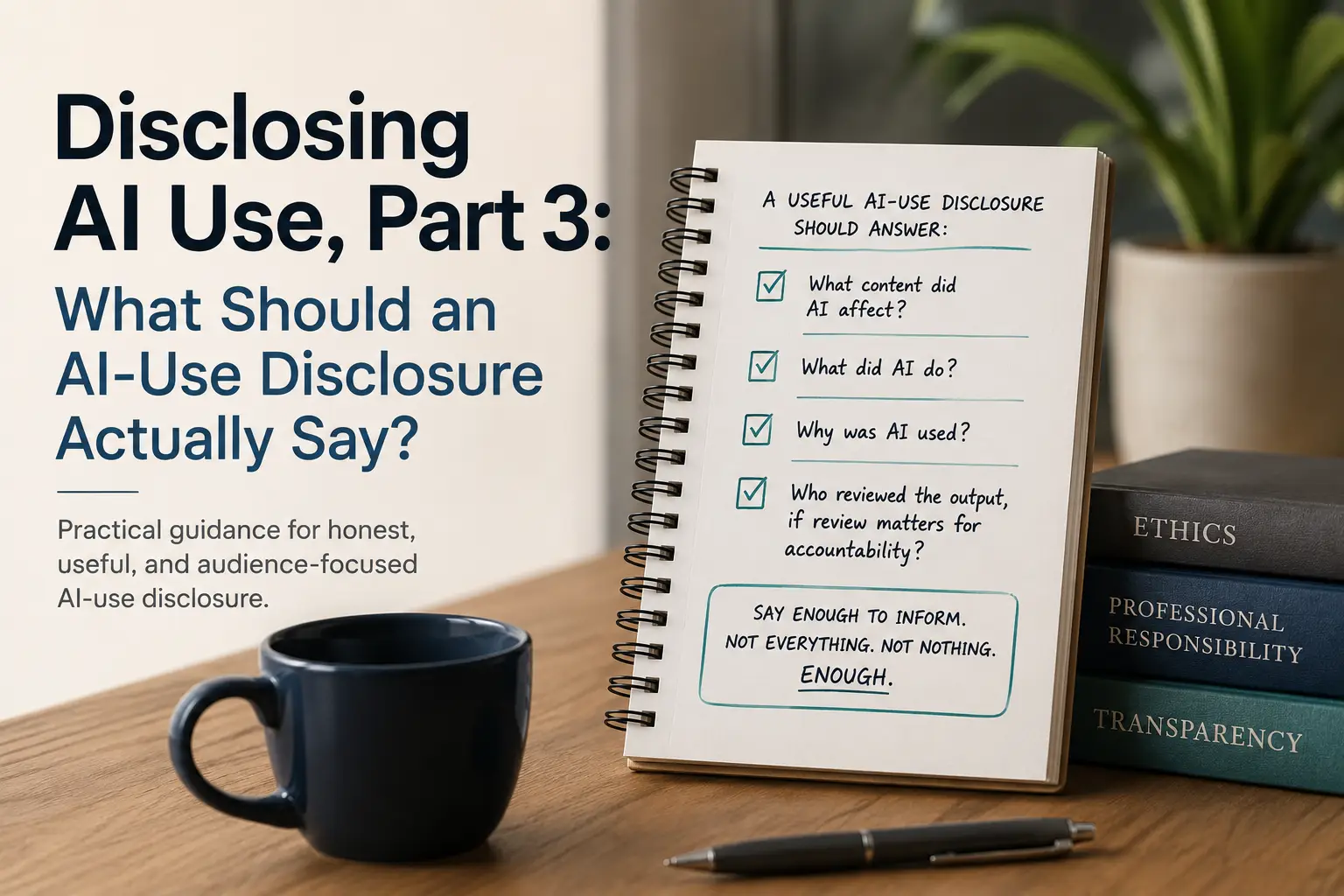
Require disclosure, but do not make disclosure the whole policy. Build exercises where students must verify authority, explain their choices, identify risks, and take responsibility for the final product. Preserve some no-AI spaces where students must build their own muscles. Create other AI-required spaces where students learn how to use the tools well. Most of all, assess the judgment behind the work, not just the polish of the finished document.
The work worth keeping is the work that forms judgment, including close reading, careful writing, honest verification, ethical reflection, humility before facts, and attention to the human person. AI may change how students do some of that work. It should not change whether they do it.
That is why I found Magnifica Humanitas so helpful. It reminded me that the central challenge of AI is not technological. It is formative. We are not just preparing students to produce legal documents in a faster world. We are preparing them to become lawyers who can use powerful tools without losing sight of truth, responsibility, and the people law exists to serve. If AI helps us do that, we should use it. If it gets in the way, we should have the courage to slow down, ask better questions, and protect the human work at the center of legal education.
AI-Use Disclosure: I read the entire papal encyclical myself (yes, over 42K words). As I did so, I highlighted parts I thought were pertinent to legal education and professional judgment. I then used ChatGPT to help me generate an outline and connect some of the random ideas into a coherent whole. It generated some paragraphs, but I wrote the vast majority of the first draft, and then I used Gemini, Claude, and ChatGPT to critique the draft. I used some of these critiques to improve the draft. Others I ignored. For example, all models told me to take out the part about the Catholic legal education, but I felt that it was important given the law school I work for to tie this in. I also used ChatGPT to create the cover photo.